Mondo Knows Facts
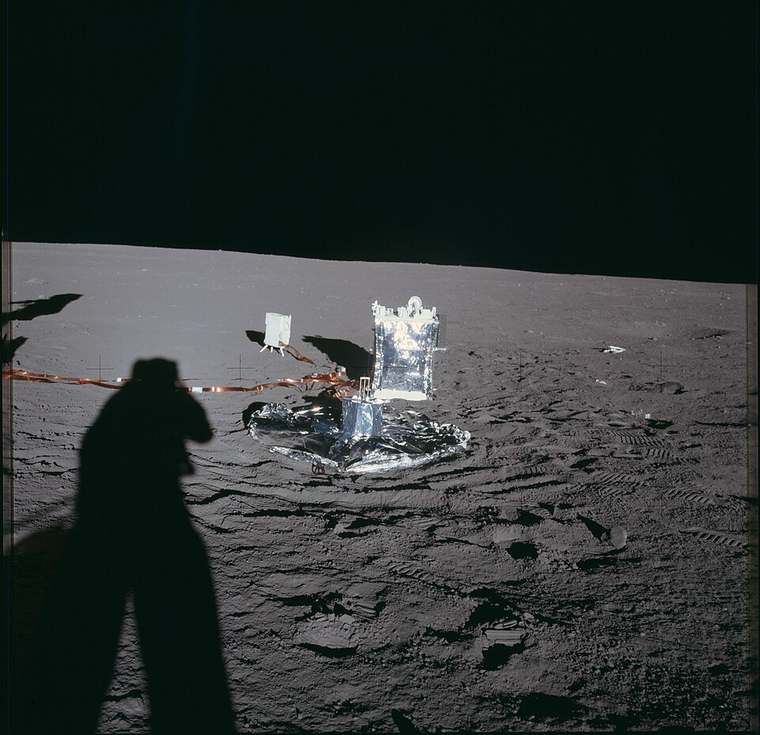
Apollo astronauts left retroreflector mirrors on the Moon surface
Laser pulses fired from Earth measure lunar distance down to millimetres
During the Apollo 11, 14 and 15 lunar missions, astronauts placed corner-cube retroreflector arrays on the Moon's surface. Scientists routinely fire laser pulses from Earth observatories at these mirror arrays, measuring the round-trip flight time to calculate the Earth-Moon distance within millimetres.
Where this comes from
Facts that can change over time are reviewed and updated. If something here looks wrong, Mondo would rather know than be confidently incorrect.
Go further
More facts like this
Footprints left on the Moon will last for millions of yearsWithout wind or water erosion Apollo astronaut tracks remain undisturbedThe Moon is slowly drifting away from EarthLuni-solar tidal friction pushes the Moon outward by roughly four centimetres each yearTotal solar eclipses are possible due to a cosmic geometric coincidenceThe Sun is 400 times wider than the Moon but also 400 times further awayThe Moon is tidally locked so it always shows the same face to EarthMatching rotational and orbital periods hide the lunar far side from viewThe first barcode scan took place at an Ohio supermarket in 1974A pack of Wrigley's chewing gum was scanned using the Universal Product Code systemThe Apollo Guidance Computer was an early user of silicon microchipsNASA purchased hundreds of thousands of integrated circuits in the 1960s to build the moon landing navigation system
Tags: apollo, laser, moon
Apollo astronauts left retroreflector mirrors on the Moon surface: the short answers
- Where does this come from, and can I check it?
- Laser pulses fired from Earth measure lunar distance down to millimetres. The figure is taken from NASA Science, which is linked in full on this page. Every fact on Mondo Knows names its source rather than repeating an unsourced claim.
- Is this really a space fact?
- Yes. It sits on the Space shelf, one of 1,090 sourced facts grouped into space, animals, the human body, history, science and more. Category pages collect every fact in the same field.
- What else can I read about it?
- The links under the fact point to a quiz, game, puzzle or calculator on the same subject, and the shelf below shows related facts. The wording here is original, and quoted phrases are marked as quotations.