Mondo Knows Facts
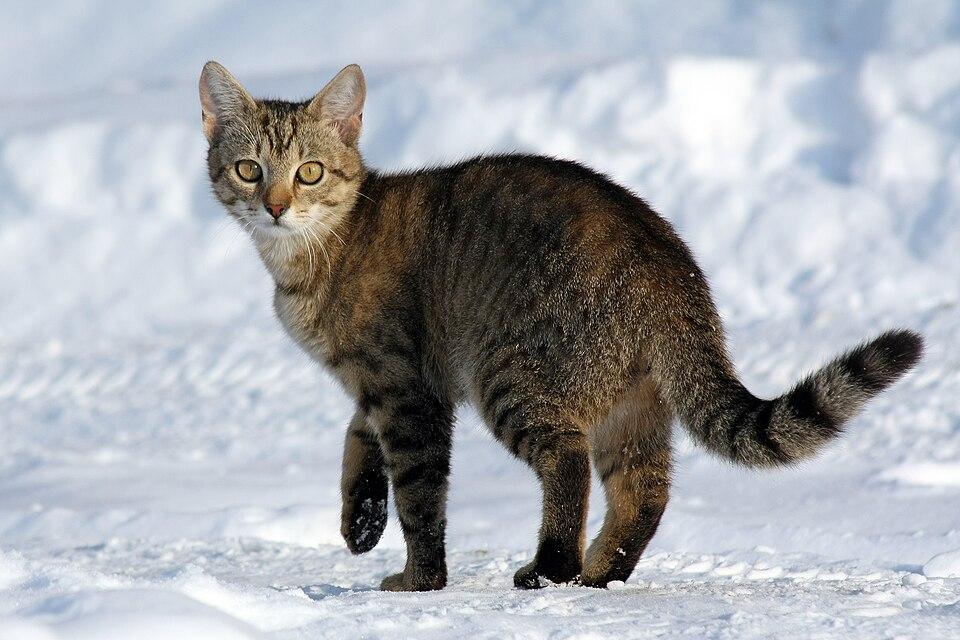
A domestic cat purrs between 25 and 150 hertz
The vibration comes from muscles in the larynx rather than the vocal cords alone Purring happens on inhale and exhale, which is why it sounds continuous. Kittens purr from a few days old, and adult cats purr when content but also when injured. Low frequency vibration has been studied for possible effects on healing. It sits in Mondo's animals collection, one of 200 facts that each trace back to the reference below.
Where this comes from
Facts that can change over time are reviewed and updated. If something here looks wrong, Mondo would rather know than be confidently incorrect.
Go further
More facts like this
Cats domesticated themselves around grain storesRodents in early farm stores drew wild cats into human settlementsSnow leopards use their thick tails as blankets and balance polesA snow leopard tail is nearly as long as its entire body length.A giraffe sleeps less than two hours a dayMost of that comes in short bouts, often standing, with deep sleep lasting only minutesRabbits eat some of their own droppingsThe first pass through the gut produces soft pellets that are re-swallowedBats leave a roost at sunset in a rushGroups emerge from a cave within a few minutes, warmest and hungriest firstChimpanzees fish for termites with prepared sticksThey select, trim and sometimes bend a twig before inserting it
🐾 Animalsfact 129 of 200
← → to keep reading, or swipe
Tags: cats, sound, behaviour
A domestic cat purrs between 25 and 150 hertz: the short answers
- Where does this come from, and can I check it?
- The vibration comes from muscles in the larynx rather than the vocal cords alone. The figure is taken from Britannica, which is linked in full on this page. Every fact on Mondo Knows names its source rather than repeating an unsourced claim.
- Is this really a animals fact?
- Yes. It sits on the Animals shelf, one of 2,600 sourced facts grouped into space, animals, the human body, history, science and more. Category pages collect every fact in the same field.
- What else can I read about it?
- The links under the fact point to a quiz, game, puzzle or calculator on the same subject, and the shelf below shows related facts. The wording here is original, and quoted phrases are marked as quotations.