Mondo Knows Facts
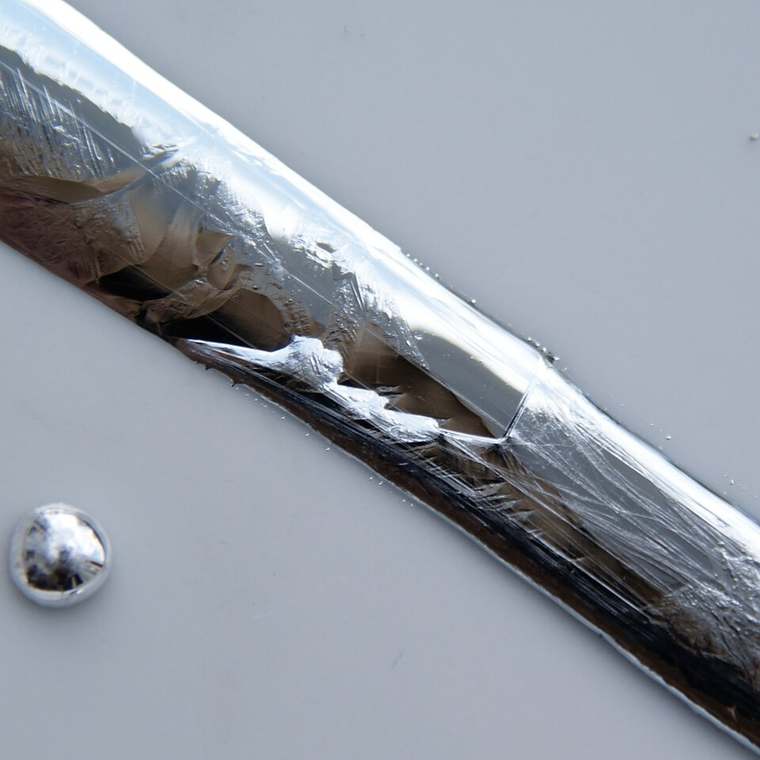
Gallium metal melts in the warmth of a human hand
A low melting point of thirty degrees Celsius liquifies solid gallium metal
Gallium is a soft metallic element with an unusually low melting point of roughly 30 degrees Celsius. Because normal human body temperature sits around 37 degrees Celsius, holding a solid piece of gallium metal causes it to melt into a shiny liquid puddle. Gallium also expands when solidifying, much like water ice.
Where this comes from
Facts that can change over time are reviewed and updated. If something here looks wrong, Mondo would rather know than be confidently incorrect.
Go further
More facts like this
Gold resists corrosion because it is chemically unreactiveHigh ionisation energy prevents gold atoms from bonding easily with oxygenThe periodic table organizes elements by proton countAtomic number dictates repeating chemical patterns across periods and groupsWater expands as it transforms from liquid to iceHydrogen bonding locks frozen water molecules into an open hexagonal latticeHydrofluoric acid dissolves glass by attacking silicon dioxideFluoride ions react with silica to convert hard glass into soluble fluorosilicic acidFrancium is the rarest naturally occurring element on EarthFewer than thirty grammes of francium exist in the entire terrestrial crust at any timeCatalysts accelerate reactions without being consumedCatalytic agents lower the activation energy barrier needed for chemical transformation
Tags: chemistry, gallium, metals
Gallium metal melts in the warmth of a human hand: the short answers
- Where does this come from, and can I check it?
- A low melting point of thirty degrees Celsius liquifies solid gallium metal. The figure is taken from US Department of Energy, which is linked in full on this page. Every fact on Mondo Knows names its source rather than repeating an unsourced claim.
- Is this really a science fact?
- Yes. It sits on the Science shelf, one of 1,090 sourced facts grouped into space, animals, the human body, history, science and more. Category pages collect every fact in the same field.
- What else can I read about it?
- The links under the fact point to a quiz, game, puzzle or calculator on the same subject, and the shelf below shows related facts. The wording here is original, and quoted phrases are marked as quotations.