Mondo Knows Facts
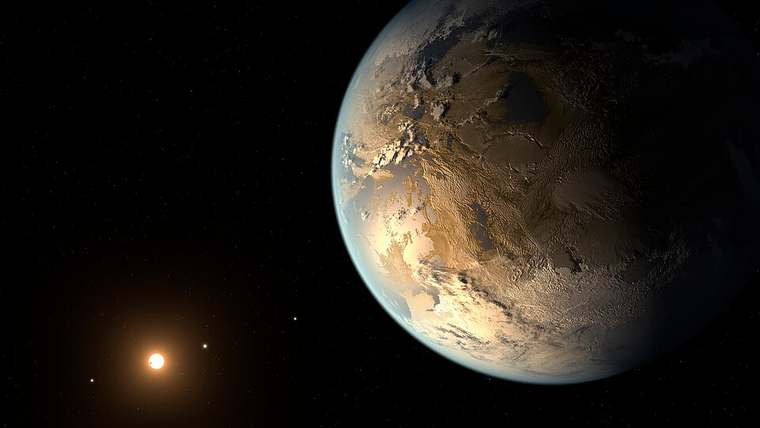
Kepler-186f was the first Earth-sized planet found in a habitable zone
The rocky exoplanet orbits a red dwarf star 500 light-years from Earth
Discovered in 2014 by NASA's Kepler Space Telescope, Kepler-186f was the first validated exoplanet with a radius similar to Earth found within its star's circumstellar habitable zone. Orbiting a red dwarf star 500 light-years away, it receives roughly one third of the stellar energy Earth receives from the Sun.
Where this comes from
Facts that can change over time are reviewed and updated. If something here looks wrong, Mondo would rather know than be confidently incorrect.
Go further
More facts like this
TRAPPIST-1 hosts seven Earth-sized rocky planets around an ultracool starThree planets in the system orbit within the habitable liquid water zoneExoplanet HD 189733b experiences liquid glass rain blowing sidewaysSeven-thousand-kilometre winds sweep silicate glass drops through hot air51 Pegasi b was the first exoplanet discovered around a Sun-like starThe discovery of a hot Jupiter in 1995 earned the 2019 Nobel PrizeUranus moon Miranda features the tallest cliff in the solar systemVerona Rupes is a sheer ice cliff dropping twenty kilometres deepPluto and Charon orbit a common centre outside Pluto bodyThe dwarf planet and its large moon form a double planet systemJupiter possesses the largest magnetic field of any solar system planetIf visible from Earth Jupiter magnetosphere would appear larger than the Moon
Tags: kepler-186f, exoplanet, habitable zone
Kepler-186f was the first Earth-sized planet found in a habitable zone: the short answers
- Where does this come from, and can I check it?
- The rocky exoplanet orbits a red dwarf star 500 light-years from Earth. The figure is taken from NASA Science, which is linked in full on this page. Every fact on Mondo Knows names its source rather than repeating an unsourced claim.
- Is this really a space fact?
- Yes. It sits on the Space shelf, one of 1,090 sourced facts grouped into space, animals, the human body, history, science and more. Category pages collect every fact in the same field.
- What else can I read about it?
- The links under the fact point to a quiz, game, puzzle or calculator on the same subject, and the shelf below shows related facts. The wording here is original, and quoted phrases are marked as quotations.