Mondo Knows Facts
Ultraviolet light creates ozone in the upper atmosphere
High energy solar radiation splits oxygen gas into reactive free atomic oxygen
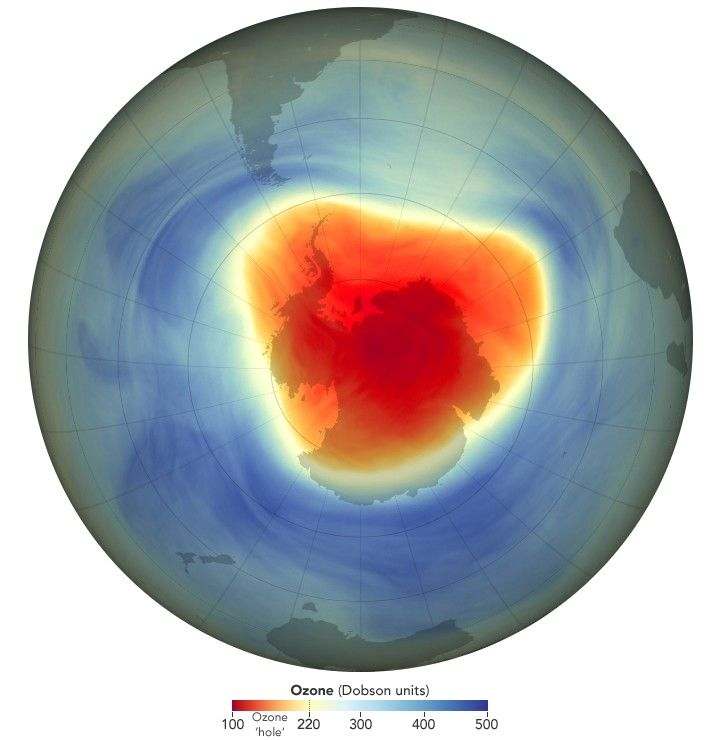
Atmospheric ozone forms in the stratosphere when shortwave solar ultraviolet radiation strikes diatomic oxygen molecules, splitting them into single oxygen atoms. These reactive atomic oxygen radicals instantly combine with intact oxygen molecules to form ozone (O3). This dynamic ozone layer absorbs harmful ultraviolet rays before they reach the surface.
Where this comes from
Facts that can change over time are reviewed and updated. If something here looks wrong, Mondo would rather know than be confidently incorrect.
Go further
More facts like this
The stratospheric ozone layer screens out harmful UV solar raysOzone gas concentrated fifteen to thirty kilometres up absorbs carcinogenic UV radiationNitrogen and oxygen make up ninety-nine percent of dry airDry atmospheric air consists of 78 percent nitrogen and 21 percent oxygen by volumeThe troposphere contains three quarters of all atmospheric massEarth lowest atmospheric layer holds almost all atmospheric water vapour and weatherHydrogen makes up three quarters of all cosmic massAs the simplest chemical element hydrogen dominates stellar composition across spaceChemical reactions either release or absorb thermal energyExothermic changes release heat while endothermic processes absorb energy from surroundingsAerogel is a solid synthetic material that is mostly airReplacing liquid in a gel with gas creates ultra-light solids up to 99 percent air
Tags: chemistry, ozone, atmosphere
Ultraviolet light creates ozone in the upper atmosphere: the short answers
- Where does this come from, and can I check it?
- High energy solar radiation splits oxygen gas into reactive free atomic oxygen. The figure is taken from NOAA, which is linked in full on this page. Every fact on Mondo Knows names its source rather than repeating an unsourced claim.
- Is this really a science fact?
- Yes. It sits on the Science shelf, one of 1,090 sourced facts grouped into space, animals, the human body, history, science and more. Category pages collect every fact in the same field.
- What else can I read about it?
- The links under the fact point to a quiz, game, puzzle or calculator on the same subject, and the shelf below shows related facts. The wording here is original, and quoted phrases are marked as quotations.