Mondo Knows Facts
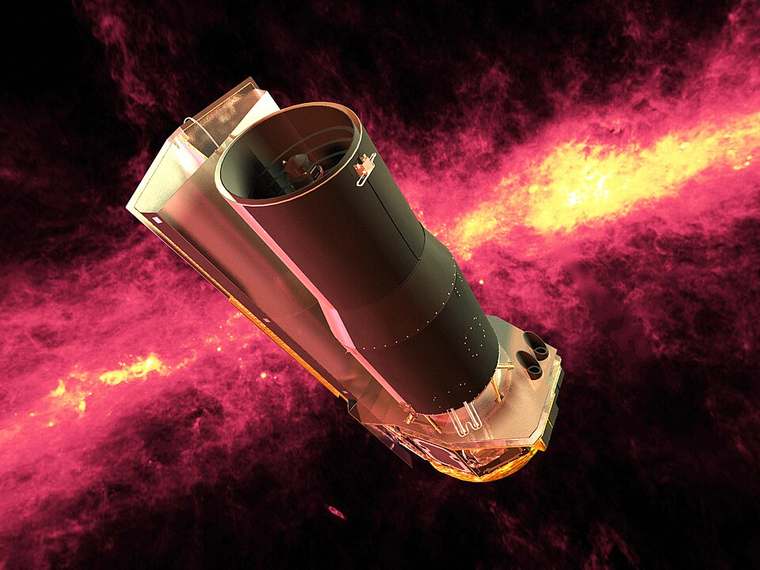
The Spitzer Space Telescope peered through interstellar dust clouds
Thermal infrared detectors imaged cold dust planet birth and faint stars
Launched in 2003 as one of NASA's Great Observatories, the Spitzer Space Telescope observed the universe in thermal infrared light. By capturing longer wavelengths capable of penetrating thick interstellar dust clouds, Spitzer revealed planet-forming protoplanetary discs, cool brown dwarfs and distant infant galaxies.
Where this comes from
Facts that can change over time are reviewed and updated. If something here looks wrong, Mondo would rather know than be confidently incorrect.
Go further
More facts like this
The Kepler Space Telescope discovered thousands of exoplanetsMonitoring star brightness dips revealed worlds orbiting distant starsThe James Webb Space Telescope uses gold-coated beryllium mirrorsGold plating reflects infrared light from the earliest stars in the universePit vipers see thermal infrared radiation in pitch darknessSensitive pit organs between eyes and nostrils detect heat differences.The heliosphere shields our solar system from harmful cosmic raysA vast magnetic bubble formed by solar wind deflects interstellar radiationGalaxies across the universe are arranged in a vast cosmic webGravity arranges billions of galaxies along dark matter filaments and voidsA day on Venus is longer than its yearVenus turns so slowly that its day outlasts its trip around the Sun
Tags: spitzer, infrared, telescope
The Spitzer Space Telescope peered through interstellar dust clouds: the short answers
- Where does this come from, and can I check it?
- Thermal infrared detectors imaged cold dust planet birth and faint stars. The figure is taken from NASA Science, which is linked in full on this page. Every fact on Mondo Knows names its source rather than repeating an unsourced claim.
- Is this really a space fact?
- Yes. It sits on the Space shelf, one of 1,090 sourced facts grouped into space, animals, the human body, history, science and more. Category pages collect every fact in the same field.
- What else can I read about it?
- The links under the fact point to a quiz, game, puzzle or calculator on the same subject, and the shelf below shows related facts. The wording here is original, and quoted phrases are marked as quotations.