Mondo Knows Facts
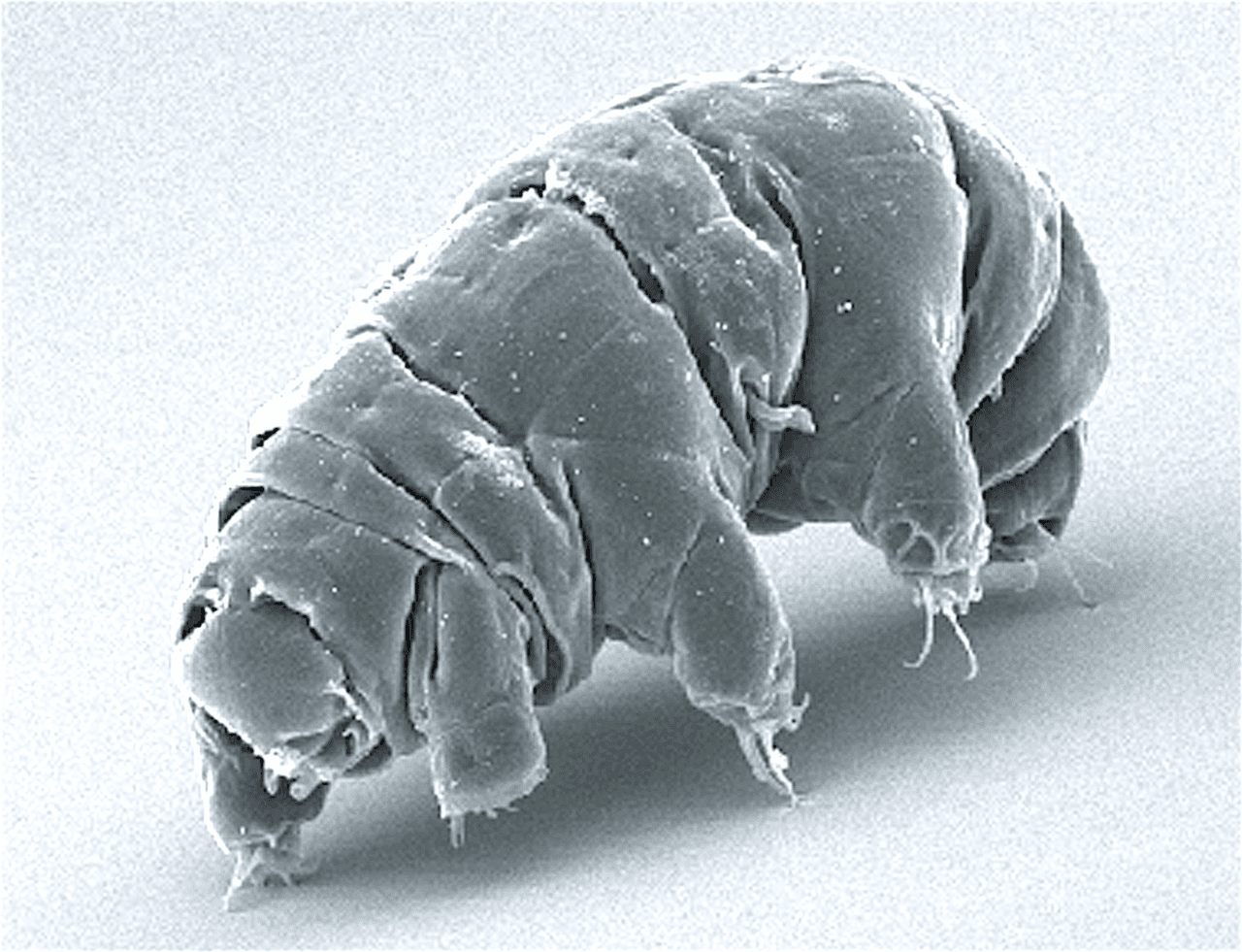
Tardigrades survive vacuum and hard radiation
They dry into a barrel called a tun and revive years later In the tun state the animals replace water with a protective sugar and curl into a ball. Specimens have survived exposure outside spacecraft and decades of storage. They live in moss, soil and deep sea sediment, not just dry land. It sits in Mondo's animals collection, one of 200 facts that each trace back to the reference below.
Where this comes from
Facts that can change over time are reviewed and updated. If something here looks wrong, Mondo would rather know than be confidently incorrect.
Go further
More facts like this
Tardigrades survive extreme vacuum radiation and freezingMicroscopic water bears enter cryptobiosis to withstand conditions lethal to other lifeTardigrades can survive outer space and extreme radiationTardigrades enter a dormant state called cryptobiosis when dried out.A wood frog survives with two thirds of its body frozenIt stops breathing and its heart halts while ice forms around the cellsExtremophile archaea thrive in boiling acid and deep hydrothermal ventsSpecialized cell membranes and stable enzymes allow archaea to inhabit hostile environmentsNaked mole rats live under a single breeding queenOnly one female breeds while her offspring dig and defend the tunnelsA giraffe sleeps less than two hours a dayMost of that comes in short bouts, often standing, with deep sleep lasting only minutes
🐾 Animalsfact 137 of 200
← → to keep reading, or swipe
Tags: tardigrades, extremophiles, survival
Tardigrades survive vacuum and hard radiation: the short answers
- Where does this come from, and can I check it?
- They dry into a barrel called a tun and revive years later. The figure is taken from Britannica, which is linked in full on this page. Every fact on Mondo Knows names its source rather than repeating an unsourced claim.
- Is this really a animals fact?
- Yes. It sits on the Animals shelf, one of 2,600 sourced facts grouped into space, animals, the human body, history, science and more. Category pages collect every fact in the same field.
- What else can I read about it?
- The links under the fact point to a quiz, game, puzzle or calculator on the same subject, and the shelf below shows related facts. The wording here is original, and quoted phrases are marked as quotations.