Mondo Knows Facts
Optical fibres trap light using total internal reflection
Light signals bounce inside glass cores without escaping through the outer boundary
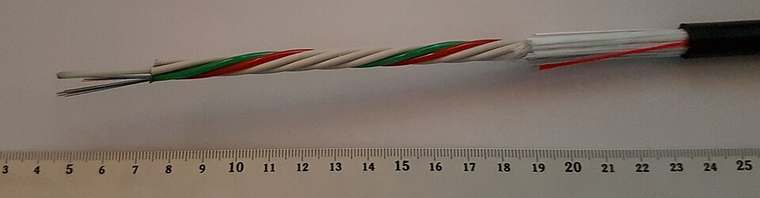
When light inside a dense glass core hits the cladding boundary at an angle greater than the critical angle, it undergoes total internal reflection. The light wave cannot refract into the outer medium and instead reflects entirely back inside the core. This mechanism enables fibre optic cables to transport digital data across global oceans with minimal loss.
Where this comes from
Facts that can change over time are reviewed and updated. If something here looks wrong, Mondo would rather know than be confidently incorrect.
Go further
More facts like this
Light bends when transitioning between different transparent materialsRefraction alters the direction of light waves due to changes in propagation speedCalcite crystals split passing light rays into double imagesBirefringent minerals refract light at two different angles based on polarisationFaster moving fluid creates lower static pressureBernoulli's principle explains how pressure drops when fluid or air velocity increasesQuantum particles exist in multiple states simultaneouslySubatomic systems remain in a superposition of probability states until measuredEarth magnetic poles flip every few hundred thousand yearsGeomagnetic reversals swap the North and South magnetic poles over geologic timescalesWater exists as solid liquid and gas at its triple pointAt zero point zero one degrees Celsius and specific pressure water coexists in three states
Tags: physics, optics, fibre optics
Optical fibres trap light using total internal reflection: the short answers
- Where does this come from, and can I check it?
- Light signals bounce inside glass cores without escaping through the outer boundary. The figure is taken from Encyclopaedia Britannica, which is linked in full on this page. Every fact on Mondo Knows names its source rather than repeating an unsourced claim.
- Is this really a science fact?
- Yes. It sits on the Science shelf, one of 1,090 sourced facts grouped into space, animals, the human body, history, science and more. Category pages collect every fact in the same field.
- What else can I read about it?
- The links under the fact point to a quiz, game, puzzle or calculator on the same subject, and the shelf below shows related facts. The wording here is original, and quoted phrases are marked as quotations.