Mondo Knows Facts
Moving wave sources shift frequency relative to observers
The Doppler effect compresses approaching sound waves and stretches departing ones
As a sound or light source moves toward an observer, each successive wave crest is emitted from a position closer to the listener, shortening the apparent wavelength and raising the frequency. As the source recedes, wavelengths stretch out and frequency drops. Astronomers use this effect to measure how fast distant galaxies move away from Earth.
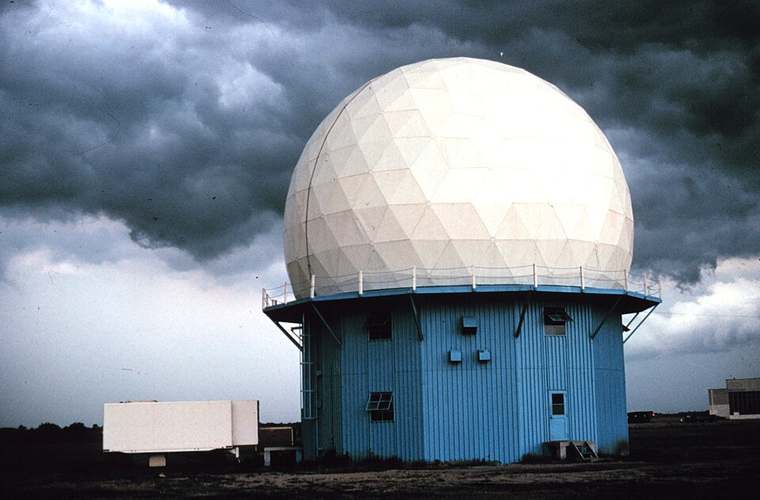
Where this comes from
Facts that can change over time are reviewed and updated. If something here looks wrong, Mondo would rather know than be confidently incorrect.
Go further
More facts like this
Light bends when transitioning between different transparent materialsRefraction alters the direction of light waves due to changes in propagation speedSurface tension allows water striders to walk on liquidCohesive hydrogen bonds draw surface water molecules into an elastic skin-like filmLight travels at nearly three hundred million metres per secondIn a vacuum light travels at an exact speed of 299,792,458 metres per secondSound travels about four times faster in water than in airDenser molecular packing in liquid water transmits mechanical acoustic waves rapidlyAbsolute zero is the theoretical lower limit of temperatureAt minus 273 degrees Celsius all classical thermal motion of atoms stops completelyLightning bolts are hotter than the surface of the SunA single electrical strike can heat surrounding air to thirty thousand degrees Celsius
Tags: physics, doppler effect, waves
Moving wave sources shift frequency relative to observers: the short answers
- Where does this come from, and can I check it?
- The Doppler effect compresses approaching sound waves and stretches departing ones. The figure is taken from NOAA, which is linked in full on this page. Every fact on Mondo Knows names its source rather than repeating an unsourced claim.
- Is this really a science fact?
- Yes. It sits on the Science shelf, one of 1,090 sourced facts grouped into space, animals, the human body, history, science and more. Category pages collect every fact in the same field.
- What else can I read about it?
- The links under the fact point to a quiz, game, puzzle or calculator on the same subject, and the shelf below shows related facts. The wording here is original, and quoted phrases are marked as quotations.