Mondo Knows Facts
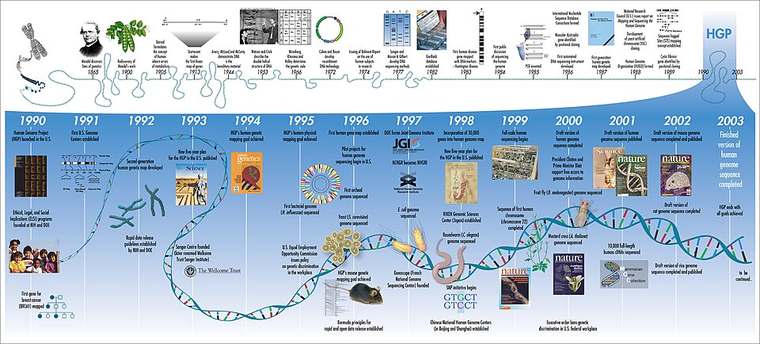
The human genome contains over three billion base pairs
Genetic code packaged across 23 chromosome pairs directs human biological development
The human genome consists of approximately 3.2 billion chemical base pairs packaged across 23 pairs of chromosomes inside cell nuclei. Uncoiled, the DNA from a single human cell would stretch roughly two metres in length. Remarkably, less than 2 percent of the human genome directly encodes functional protein sequences.
Where this comes from
Facts that can change over time are reviewed and updated. If something here looks wrong, Mondo would rather know than be confidently incorrect.
Go further
More facts like this
DNA stores genetic instruction in a double helix structureFour nitrogenous base pairs form the chemical alphabet of living organismsCRISPR originated as a bacterial defense against viral infectionsBacteria store fragments of viral DNA to recognise and slice invading virusesEpigenetics alters gene activity without changing DNA codeChemical tags on DNA control whether specific genes are switched on or offTelomeres cap chromosome ends and shorten as cells divideRepetitive nucleotide sequences protect genetic data during cell replication cyclesOsmosis drives water through membranes toward higher solute concentrationSolute gradients push solvent molecules to equalize concentrations across barriersMitochondria produce most of the energy used by eukaryotic cellsCellular respiration inside mitochondria converts nutrients into energy-rich ATP molecules
Tags: biology, genome, genetics
The human genome contains over three billion base pairs: the short answers
- Where does this come from, and can I check it?
- Genetic code packaged across 23 chromosome pairs directs human biological development. The figure is taken from Nobel Prize, which is linked in full on this page. Every fact on Mondo Knows names its source rather than repeating an unsourced claim.
- Is this really a science fact?
- Yes. It sits on the Science shelf, one of 1,090 sourced facts grouped into space, animals, the human body, history, science and more. Category pages collect every fact in the same field.
- What else can I read about it?
- The links under the fact point to a quiz, game, puzzle or calculator on the same subject, and the shelf below shows related facts. The wording here is original, and quoted phrases are marked as quotations.