Mondo Knows Facts
The Olympic rings stand for five continents
Pierre de Coubertin introduced the symbol in 1913
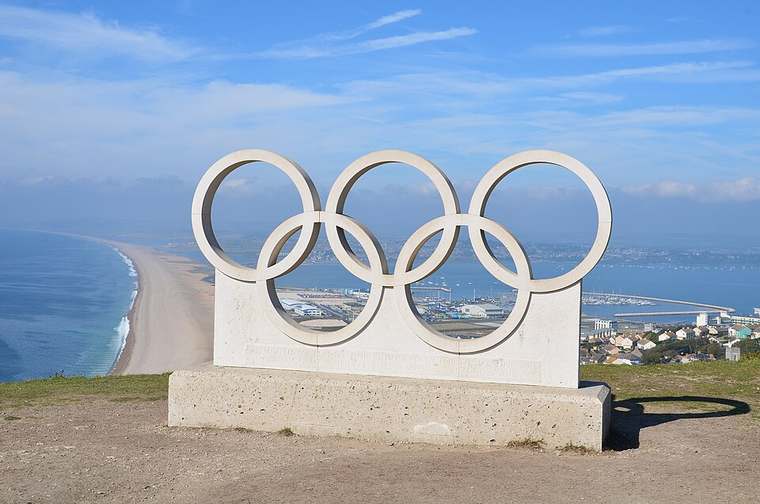
The five interlocking rings were introduced by Pierre de Coubertin, the founder of the modern Olympic movement, in 1913, and first flew at the 1920 Antwerp Games. They represent the five inhabited continents joined together. The rings and white background contain the colours of every national flag of that time.
Where this comes from
Facts that can change over time are reviewed and updated. If something here looks wrong, Mondo would rather know than be confidently incorrect.
Go further
More facts like this
The marathon is 42.195 km because of a royal viewThe odd distance comes from the 1908 London Olympics courseJesse Owens won four gold medals at the 1936 OlympicsHe took the 100 m, 200 m, long jump and 4x100 m relay in BerlinThe ancient Olympics are traditionally dated to 776 BCThey were held at Olympia in Greece for about twelve centuriesMichael Phelps has won 23 Olympic gold medalsNo other Olympian has won more golds or more medals overallA perfect 10 once broke the scoreboardNadia Comaneci's routine at the 1976 Olympics displayed as 1.00The first Formula One world championship was in 1950It began at Silverstone and Giuseppe Farina became the first champion
Tags: olympics, symbol, history
The Olympic rings stand for five continents: the short answers
- Where does this come from, and can I check it?
- Pierre de Coubertin introduced the symbol in 1913. The figure is taken from Olympics.com, which is linked in full on this page. Every fact on Mondo Knows names its source rather than repeating an unsourced claim.
- Is this really a sports fact?
- Yes. It sits on the Sports shelf, one of 1,090 sourced facts grouped into space, animals, the human body, history, science and more. Category pages collect every fact in the same field.
- What else can I read about it?
- The links under the fact point to a quiz, game, puzzle or calculator on the same subject, and the shelf below shows related facts. The wording here is original, and quoted phrases are marked as quotations.