Mondo Knows Facts
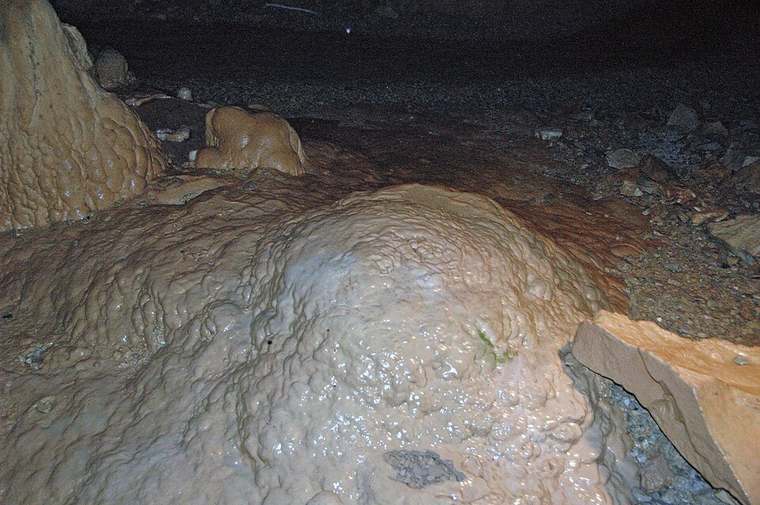
Dripping mineral water builds stalactites and stalagmites in caves
Precipitated calcium carbonate forms hanging icicle structures and floor mounds
Stalactites and stalagmites form in karst cave systems when rainwater absorbs carbon dioxide from soil to form weak carbonic acid. As acidic groundwater trickles through limestone bedrock, it dissolves calcium carbonate before entering open cave caverns. When water droplets release carbon dioxide into cave air, dissolved calcite precipitates to form dripstone structures over centuries.
Where this comes from
Facts that can change over time are reviewed and updated. If something here looks wrong, Mondo would rather know than be confidently incorrect.
Go further
More facts like this
Dissolving bedrock creates sinkholes and underground drainage systemsChemical weathering of soluble rocks shapes distinctive karst landscapesPetrification turns organic wood into stone over millenniaPer-mineralisation replaces cell structures with silica and quartz minerals step by stepEarth inner core stays solid despite temperatures of five thousand degreesEnormous gravitational pressure prevents molten iron from melting into liquid at the coreTectonic plates move at speeds comparable to fingernail growthLithospheric plates drift across Earth mantle at rates of one to ten centimetres annuallyHeat from Earth core drives slow mantle convection currentsThermal convection of semi-solid rock beneath the crust drives planetary driftMammoth Cave is the longest known cave systemMore than 680 kilometres of passages have been surveyed beneath Kentucky
Tags: earth science, caves, geology
Dripping mineral water builds stalactites and stalagmites in caves: the short answers
- Where does this come from, and can I check it?
- Precipitated calcium carbonate forms hanging icicle structures and floor mounds. The figure is taken from USGS, which is linked in full on this page. Every fact on Mondo Knows names its source rather than repeating an unsourced claim.
- Is this really a science fact?
- Yes. It sits on the Science shelf, one of 1,090 sourced facts grouped into space, animals, the human body, history, science and more. Category pages collect every fact in the same field.
- What else can I read about it?
- The links under the fact point to a quiz, game, puzzle or calculator on the same subject, and the shelf below shows related facts. The wording here is original, and quoted phrases are marked as quotations.