Mondo Knows Facts
Traffic yellow light durations depend on road speed limits
Engineers calculate amber light timing using approach speeds and braking distance
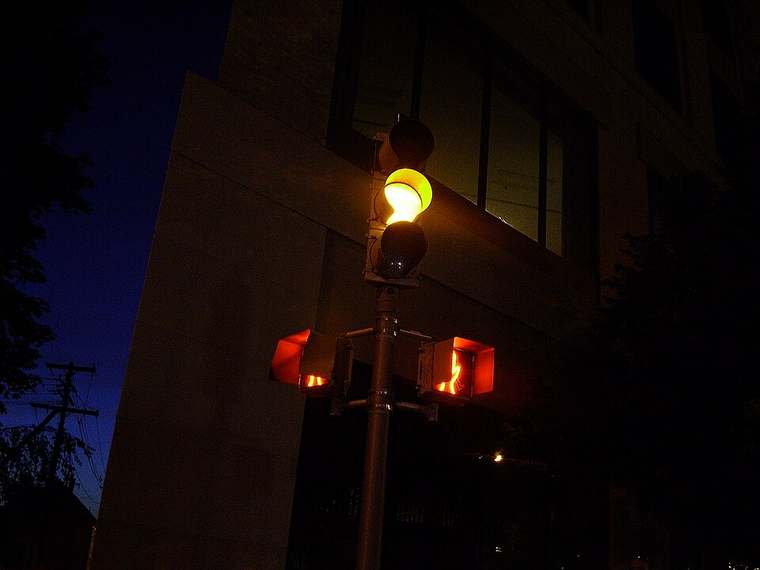
The length of time an amber or yellow traffic signal stays illuminated is not chosen at random. Traffic engineers calculate yellow light intervals using vehicle approach speed, braking deceleration rates, and driver reaction time to ensure drivers can stop safely or cross the intersection completely before red.
Where this comes from
Facts that can change over time are reviewed and updated. If something here looks wrong, Mondo would rather know than be confidently incorrect.
Go further
More facts like this
Flexible plastic traffic cones were invented by Charles Scanlon in 1940Stackable hollow rubber cones replaced wooden barricades to protect road workersStandard traffic signals arrange red at top and green at bottomVertical light positioning assists colour-blind drivers across international roadsTraffic roundabouts improve safety by requiring entering cars to yieldPriority rules inside circular junctions drastically reduce severe crossroad collisionsHighway road markings contain glass beads to reflect headlight beamsMicroscopic glass spheres in road paint redirect light beams back to driversUnder-road induction loops trigger green traffic lights for vehiclesEmbedded wire coils detect metal car bodies to operate automatic traffic signalsHighway road signs use specially engineered high-contrast fontsCustom sign typography prevents letter halation glow under bright night headlights
Tags: traffic, safety, physics
Traffic yellow light durations depend on road speed limits: the short answers
- Where does this come from, and can I check it?
- Engineers calculate amber light timing using approach speeds and braking distance. The figure is taken from NIST, which is linked in full on this page. Every fact on Mondo Knows names its source rather than repeating an unsourced claim.
- Is this really a everyday life fact?
- Yes. It sits on the Everyday Life shelf, one of 1,090 sourced facts grouped into space, animals, the human body, history, science and more. Category pages collect every fact in the same field.
- What else can I read about it?
- The links under the fact point to a quiz, game, puzzle or calculator on the same subject, and the shelf below shows related facts. The wording here is original, and quoted phrases are marked as quotations.