Mondo Knows Facts
Nesting shopping trolleys were designed with hinged rear flaps
Sliding nested trolleys compact store storage while providing child seats
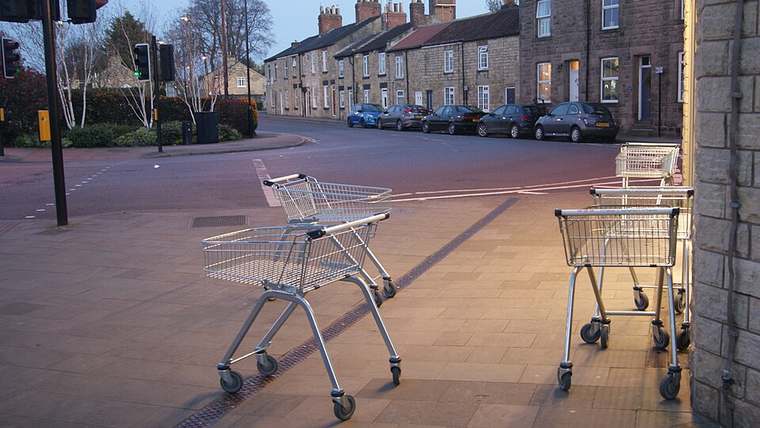
Supermarket owner Sylvan Goldman invented the folding shopping cart in 1937 to encourage customers to buy more grocery items per visit. Engineer Orla Watson later patented nesting carts with hinged rear flaps in 1947, allowing trolleys to slide into one another for compact storage in store vestibules.
Where this comes from
Facts that can change over time are reviewed and updated. If something here looks wrong, Mondo would rather know than be confidently incorrect.
Go further
More facts like this
Supermarket trolley locks require coins to encourage bay returnsInterlocking coin mechanisms incentivize shoppers to return trolleys to parking stacksReceipt printers use heat-sensitive paper coated with leuco dyeTargeted thermal pulses turn chemical paper coatings black to print receipt textBarcode numbers end with a mathematically calculated check digitModulo 10 algorithms check barcode scanner accuracy to flag unreadable scansBarcode scanners read light reflected from white spacesOptical scanners detect reflected light between black lines rather than the black inkPost-it notes use low-tack microscopic adhesive spheresWeak microsphere adhesive permits sticky paper strips to peel cleanly without damageMary Anderson patented the mechanical car windscreen wiper in 1903A lever-operated rubber blade cleared sleet from trolley and car windscreens
Tags: shopping, retail, inventions
Nesting shopping trolleys were designed with hinged rear flaps: the short answers
- Where does this come from, and can I check it?
- Sliding nested trolleys compact store storage while providing child seats. The figure is taken from Smithsonian Institution, which is linked in full on this page. Every fact on Mondo Knows names its source rather than repeating an unsourced claim.
- Is this really a everyday life fact?
- Yes. It sits on the Everyday Life shelf, one of 1,090 sourced facts grouped into space, animals, the human body, history, science and more. Category pages collect every fact in the same field.
- What else can I read about it?
- The links under the fact point to a quiz, game, puzzle or calculator on the same subject, and the shelf below shows related facts. The wording here is original, and quoted phrases are marked as quotations.