Mondo Knows Facts
Galileo Galilei discovered the four main moons of Jupiter
Telescopic observations in 1610 provided direct evidence against geocentrism
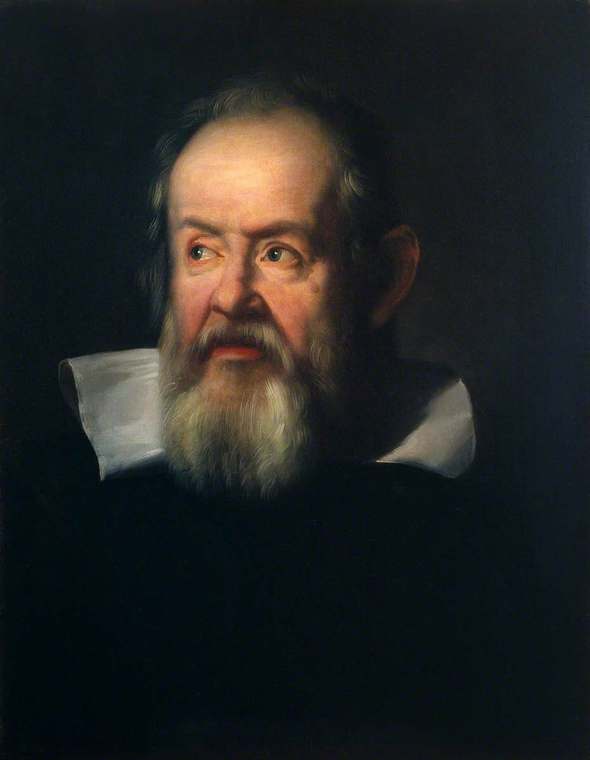
In early 1610, Italian astronomer Galileo Galilei pointed an improved telescope toward Jupiter and identified four orbiting moons: Io, Europa, Ganymede, and Callisto. Published in his treatise Sidereus Nuncius, the discovery proved that celestial bodies could orbit planets other than Earth, challenging Aristotelian cosmology.
Where this comes from
Facts that can change over time are reviewed and updated. If something here looks wrong, Mondo would rather know than be confidently incorrect.
Go further
More facts like this
Century years are only leap years if divisible by four hundredThe Gregorian calendar skips leap days on most century years to fix solar driftThe seven-day week traces back to ancient Babylonian lunar trackingQuarterly moon phases inspired the ancient seven-day weekly calendar cycleA light-year is a measure of distance rather than timeOne light-year equals roughly 9.46 trillion kilometres travelled by light in a year51 Pegasi b was the first exoplanet discovered around a Sun-like starThe discovery of a hot Jupiter in 1995 earned the 2019 Nobel PrizeJupiter has the shortest day of any solar system planetThe gas giant completes a full rotation in under ten hoursEuropa may hold twice as much water as all Earth oceans combinedA deep saltwater ocean sits concealed beneath the icy crust of Jupiter moon
Tags: galileo, jupiter, astronomy
Galileo Galilei discovered the four main moons of Jupiter: the short answers
- Where does this come from, and can I check it?
- Telescopic observations in 1610 provided direct evidence against geocentrism. The figure is taken from Encyclopaedia Britannica, which is linked in full on this page. Every fact on Mondo Knows names its source rather than repeating an unsourced claim.
- Is this really a history fact?
- Yes. It sits on the History shelf, one of 1,090 sourced facts grouped into space, animals, the human body, history, science and more. Category pages collect every fact in the same field.
- What else can I read about it?
- The links under the fact point to a quiz, game, puzzle or calculator on the same subject, and the shelf below shows related facts. The wording here is original, and quoted phrases are marked as quotations.