Mondo Knows Facts
Isaac Newton published his universal laws of motion and gravity
Principia Mathematica transformed physics and mathematical astronomy in 1687
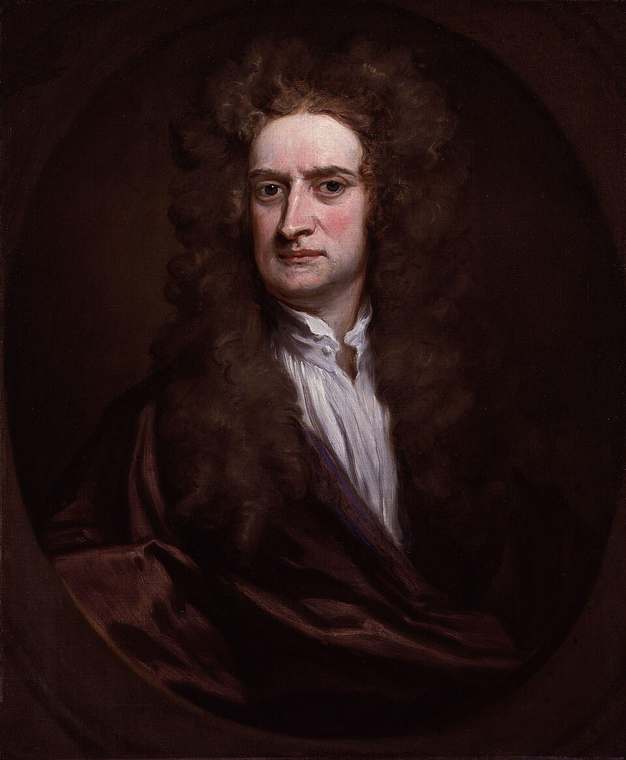
In July 1687, English mathematician Sir Isaac Newton published Philosophiae Naturalis Principia Mathematica. The landmark work set forth the three universal laws of motion and the law of universal gravitation, unifying terrestrial physics with celestial mechanics to lay the foundation of classical mechanics.
Where this comes from
Facts that can change over time are reviewed and updated. If something here looks wrong, Mondo would rather know than be confidently incorrect.
Go further
More facts like this
Light travels at nearly three hundred million metres per secondIn a vacuum light travels at an exact speed of 299,792,458 metres per secondSound travels about four times faster in water than in airDenser molecular packing in liquid water transmits mechanical acoustic waves rapidlyAbsolute zero is the theoretical lower limit of temperatureAt minus 273 degrees Celsius all classical thermal motion of atoms stops completelyLightning bolts are hotter than the surface of the SunA single electrical strike can heat surrounding air to thirty thousand degrees CelsiusSuperconductors carry electricity with zero energy lossCooled below a critical temperature certain materials conduct electric current perfectlyLight particles possess energy but no rest massPhotons travel at the speed of light because they carry momentum without rest mass
Tags: newton, physics, principia
Isaac Newton published his universal laws of motion and gravity: the short answers
- Where does this come from, and can I check it?
- Principia Mathematica transformed physics and mathematical astronomy in 1687. The figure is taken from British Library, which is linked in full on this page. Every fact on Mondo Knows names its source rather than repeating an unsourced claim.
- Is this really a history fact?
- Yes. It sits on the History shelf, one of 1,090 sourced facts grouped into space, animals, the human body, history, science and more. Category pages collect every fact in the same field.
- What else can I read about it?
- The links under the fact point to a quiz, game, puzzle or calculator on the same subject, and the shelf below shows related facts. The wording here is original, and quoted phrases are marked as quotations.